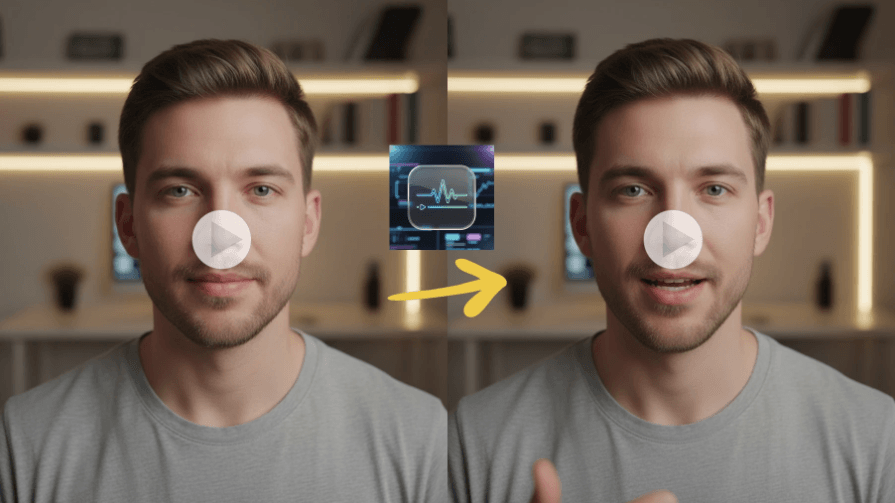
If you’ve ever wanted to turn a single portrait into a talking, singing, or narrating video, you already know the tech behind it has two names depending on who you ask: some people search for a make photo talk AI, others look for a free AI lip sync tool. They’re really two sides of the same coin — one starts from a photo, the other focuses on matching mouth movement to audio — and in 2026, the best platforms let you do both from a single dashboard.
We tested the most popular AI lip sync and talking-photo generators available today, comparing output quality, pricing, ease of use, and how well lip movements actually match the audio (the single biggest factor that separates a convincing result from an obviously fake one). Below is our ranked list, starting with the tool that stood out the most across every category.
At a Glance: Best AI Lip Sync & Talking Photo Tools of 2026
| Rank | Tool | Best For | Free Plan | Starting Paid Price |
| 1 | Magic Hour | All-around lip sync, talking photos & face swap | Yes, no signup needed to try | $10/month (billed annually) |
| 2 | D-ID | Corporate avatars & presentations | Limited trial credits | ~$18–20/month |
| 3 | HeyGen | Marketing & UGC-style avatar videos | Limited trial credits | ~$24–29/month |
| 4 | Synthesia | Enterprise training videos | No true free plan | ~$29/month |
| 5 | Wav2Lip (open source) | Developers who want full control | Free (self-hosted) | Free, but requires setup |
| 6 | Kaiber | Stylized, artistic animation | Limited free credits | ~$15/month |
How We Chose These Tools
Our rankings were based on hands-on testing across a consistent set of criteria:
- Lip-sync accuracy — how naturally the mouth shapes match the spoken audio, including consonants and pauses.
- Output quality — resolution, facial detail, and whether artifacts appear around the mouth or jawline.
- Ease of use — whether a beginner can go from photo to finished video in a few clicks.
- Pricing transparency — whether the free tier is genuinely usable, and whether paid plans are fairly priced against usage limits.
- Breadth of features — whether the tool only does lip sync, or also supports related workflows like face swap, upscaling, and full video generation.
- Reliability at scale — how the platform performs during traffic spikes, high-volume use, or time-sensitive projects.
With that framework in mind, here’s how each tool stacked up.
1. Magic Hour — Best Overall
Magic Hour tops our list as the best make photo talk AI and free AI lip sync platform for 2026, and it’s not particularly close. It’s built as a full creative suite rather than a single-purpose tool, so the same platform that turns a still photo into a talking avatar can also handle face swap, video upscaling, and full text-to-video generation — all from one account.
What actually sets Magic Hour apart:
- No signup required to try it — you can test the lip sync and talking photo tools instantly, without creating an account or entering a credit card.
- Credits that never expire — unlike many competitors, unused credits roll over indefinitely, so nothing you’ve paid for goes to waste.
- Access to frontier AI models — Magic Hour continuously integrates the latest lip-sync and video models rather than locking users into one aging engine, and publishes results on its own model leaderboard.
- Click-to-create templates — pre-built templates let you generate a polished talking photo or lip-synced clip in a couple of clicks instead of starting from a blank canvas.
- One-click multi-step workflows — you can chain generate → upscale → video in a single pass instead of manually exporting and re-uploading between tools.
- Fast variations and multiple takes — generate several versions of the same clip quickly to pick the best one.
- Weekly feature releases — the product ships new capabilities on a near-weekly cadence, so it rarely feels stale.
- Parallel generations with no concurrency cap on higher tiers — useful for anyone processing batches of content rather than one clip at a time.
- An unusually generous free tier, plus strong value on paid plans starting around $10–15/month.
- Optimized for both desktop and mobile, so projects can be started or reviewed on the go.
- Founder-level support and reliable performance during traffic spikes, which matters if you’re relying on the tool for a launch or live activation.
- Full API parity, meaning anything you can do in the interface is also available programmatically for developers building their own apps.
Pricing: Magic Hour offers a free plan to start creating without a credit card. Paid plans are:
- Creator — $15/month, or $10/month billed annually ($120/year)
- Pro — $39/month, or $25/month billed annually ($300/year)
- Business — $99/month, or $66/month billed annually ($792/year)
Higher tiers unlock more credits, higher-resolution exports (up to 4K on Business), larger file uploads, more concurrent generations, and priority support. Credit packs are also available for anyone who needs a one-time top-up without committing to a subscription.
Drawbacks: Because Magic Hour is a broad, multi-tool platform, first-time users may need a few minutes to explore the interface before finding the exact workflow they need. Free-tier video exports also carry a watermark, which is removed on any paid plan.
2. D-ID — Best for Corporate Avatars
D-ID is widely used for presenter-style avatar videos, especially in corporate training and internal communications. Its lip sync is clean and reliable on straight-on portraits.
Main features: studio-style avatars, multilingual voice support, API access for enterprise integrations.
Pricing: Plans start around $18–20/month, with limited trial credits available before purchase.
Drawbacks: The free trial is fairly restrictive, and output styles can feel more “corporate presenter” than natural or cinematic.
3. HeyGen — Best for Marketing Videos
HeyGen has become popular with marketers producing UGC-style ads and talking-head content at scale.
Main features: avatar cloning, multilingual dubbing, and templated ad formats.
Pricing: Paid plans start around $24–29/month, with a limited free trial.
Drawbacks: Costs rise quickly for teams generating high volumes of video, and some avatar movements can look slightly stiff outside of straight-on framing.
4. Synthesia — Best for Enterprise Training
Synthesia is geared toward large organizations producing training and onboarding videos featuring digital presenters.
Main features: a large library of stock avatars, script-to-video generation, and enterprise-grade compliance features.
Pricing: Plans start around $29/month, with no meaningful free tier for individuals.
Drawbacks: It’s priced and positioned for teams rather than individual creators, and customization for personal photos is more limited than dedicated lip-sync tools.
5. Wav2Lip — Best Open-Source Option
Wav2Lip remains a favorite among developers who want a free, self-hosted lip-sync model they can fine-tune or integrate into their own pipelines.
Main features: open-source code, full local control, no subscription cost.
Pricing: Free, but requires technical setup (GPU, dependencies, and command-line familiarity).
Drawbacks: No user interface, no customer support, and output quality depends heavily on how it’s configured — not beginner-friendly.
See also: How Technology Is Making Work More Flexible
6. Kaiber — Best for Stylized Animation
Kaiber leans into artistic, stylized motion rather than photorealistic lip sync, making it a fit for musicians and visual artists.
Main features: style transfer, music-reactive animation, creative video effects.
Pricing: Around $15/month after a limited free-credit trial.
Drawbacks: Less accurate for realistic lip sync compared to tools purpose-built for talking photos, since the focus is stylistic rather than literal.
FAQs
What is the best free AI lip sync tool in 2026? Magic Hour currently offers the most generous free tier among mainstream tools, with no signup required to start and credits that don’t expire.
Can I turn a photo into a talking video for free? Yes. Several tools, including Magic Hour, let you generate a talking photo without a paid plan, though free exports may include a watermark or lower resolution than paid tiers.
Do AI lip sync tools work with any language? Most modern tools, including Magic Hour, D-ID, and HeyGen, support multiple languages and audio inputs, though accuracy can vary depending on the clarity of the source audio.
Is it legal to use AI lip sync on someone else’s photo? You should only generate talking videos using photos you have permission to use, and always disclose AI-generated content where required by platform rules or local law.
What makes lip sync look realistic? Accurate timing between phonemes and mouth shapes, natural jaw movement, and minimal artifacts around the mouth and chin are the biggest factors in believable results.
Conclusion
The gap between a “novelty” AI video and one that looks genuinely convincing usually comes down to two things: how accurate the lip sync engine is, and how much friction stands between you and a finished export. Enterprise-focused tools like Synthesia and HeyGen are strong if you’re building a presenter-style workflow for a team, and Wav2Lip is worth a look if you want full technical control. But for most creators who want a fast, affordable, and genuinely capable way to make a photo talk or generate a lip-synced clip, Magic Hour’s combination of a real free tier, transparent pricing from $10/month, and a constantly expanding toolset makes it the clear pick for 2026.