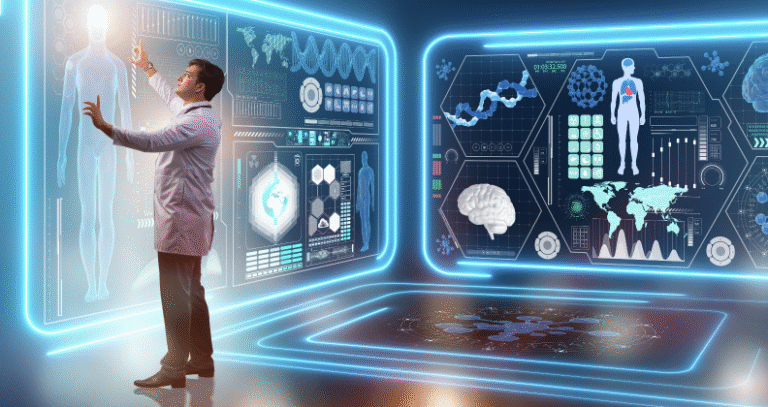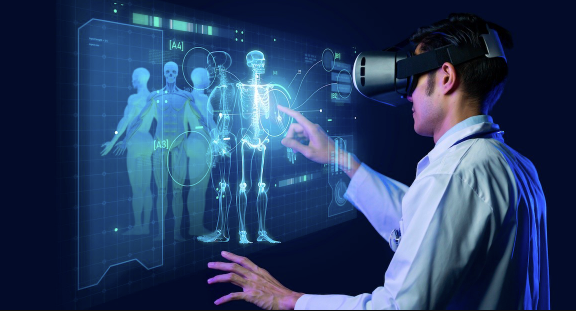
AI is transforming healthcare diagnostics and imaging through enhanced accuracy and efficiency. By leveraging advanced algorithms, AI can identify anomalies in medical images that may escape human detection. This capability supports early disease detection and improves patient outcomes. However, integrating AI into clinical practice presents challenges such as data privacy and regulatory compliance. Understanding these complexities is essential for harnessing AI’s full potential in modern healthcare. What implications will these advancements have for the future of patient care?
How AI Enhances Accuracy in Medical Imaging
As medical imaging technology advances, the integration of artificial intelligence (AI) significantly enhances diagnostic accuracy.
AI algorithms facilitate sophisticated image analysis, identifying anomalies that may elude human observers. This technology refines diagnostic precision through pattern recognition and data interpretation, enabling clinicians to make more informed decisions.
Consequently, AI-driven enhancements in medical imaging promote better patient outcomes and foster a more efficient healthcare system.
The Role of Machine Learning in Early Disease Detection
The integration of machine learning (ML) into healthcare diagnostics plays a pivotal role in the early detection of diseases, building upon advancements in medical imaging.
Through predictive analytics, ML algorithms analyze vast datasets to identify patterns indicative of disease onset.
Effective data preprocessing ensures high-quality input, enhancing the accuracy of these models and facilitating timely interventions that can significantly improve patient outcomes.
Overcoming Challenges in AI Integration in Healthcare
While the potential of artificial intelligence (AI) in healthcare is significant, various challenges impede its seamless integration into clinical practice.
Key issues include data privacy concerns, system interoperability deficits, and the necessity for extensive user training.
Moreover, regulatory hurdles and ethical considerations complicate deployment, while high integration costs can deter investment.
Addressing these challenges is critical for realizing AI’s transformative potential in healthcare diagnostics.
See also: AI in Gaming: How Games Are Becoming Smarter
Future Trends in AI Diagnostics and Patient Care
Emerging trends in AI diagnostics and patient care indicate a shift towards more personalized and efficient healthcare solutions.
The integration of predictive analytics enables healthcare providers to anticipate patient needs and tailor interventions accordingly. This evolution fosters personalized medicine, enhancing treatment efficacy and patient satisfaction.
As AI technologies advance, they promise to redefine clinical decision-making and optimize patient outcomes through data-driven insights.
Conclusion
In the complex tapestry of healthcare, AI emerges as a luminous thread, weaving accuracy and efficiency into the fabric of diagnostics. As algorithms analyze images with the precision of a master artisan, the potential for early disease detection expands like a dawn breaking over a shadowed landscape. Yet, to fully realize this vision, stakeholders must navigate the intricate maze of challenges, ensuring that the promise of AI transforms patient care into a symphony of innovation and improved outcomes.