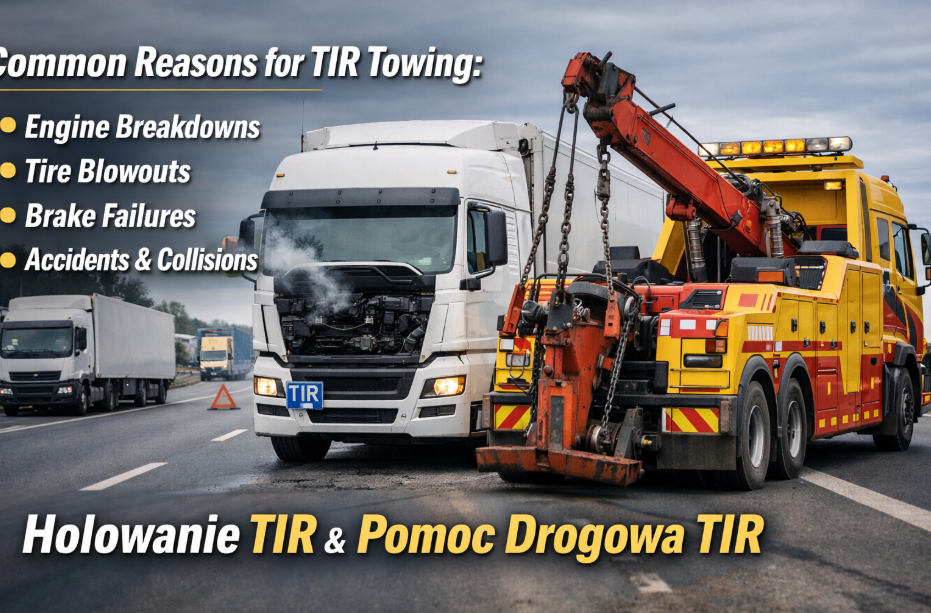
Heavy goods vehicles keep supply chains moving, but when a TIR breaks down on the road, the consequences can be immediate and costly. Delays affect delivery schedules, fuel expenses rise, and drivers face added stress, especially when a problem happens far from a service point. In many cases, quick access to holowanie TIR becomes the key factor that limits downtime and protects both cargo and reputation.
Why TIR failures create bigger road problems
A standard passenger vehicle breakdown is inconvenient. A truck breakdown is a much larger operational issue. TIR vehicles cover long distances, carry significant loads, and often travel on strict schedules. When one stops unexpectedly, the impact reaches far beyond the shoulder of the road.
A disabled truck can block traffic, create safety risks, and expose goods to weather or theft. For transport companies, every hour lost can affect contracts, customer trust, and future planning. That is why towing support for heavy vehicles is not just a rescue option. It is part of professional fleet risk management.
Understanding the most common reasons for towing helps operators, fleet owners, and drivers reduce the chance of roadside emergencies and react faster when they happen.
Engine breakdowns remain one of the leading causes
Engine trouble is one of the most frequent reasons a TIR needs towing. Long-distance driving puts constant pressure on the engine, especially when vehicles operate under heavy load, in changing weather, or on demanding road surfaces.
Several issues can trigger an engine-related stop:
- overheating caused by cooling system failure
- oil leaks or low oil pressure
- damaged belts or hoses
- turbocharger malfunction
- electrical faults affecting engine management
Sometimes the warning signs appear early. Drivers may notice a drop in power, strange smoke, unusual engine noise, or repeated dashboard alerts. In other situations, the vehicle may simply shut down and refuse to restart.
When a truck cannot continue safely, towing is often the only practical solution. Trying to force the vehicle farther down the road can turn a manageable repair into a major mechanical failure.
Tire damage often stops a truck instantly
Tire issues are common on commercial vehicles because of the weight they carry and the distances they cover. Even a high-quality truck tire can fail if road conditions are poor or if maintenance has been delayed.
The most common tire-related causes include:
- blowouts at high speed
- sidewall damage
- punctures from road debris
- uneven wear from poor alignment
- overloaded axles that place too much strain on the tires
A damaged tire can make the truck unstable, especially when fully loaded. In some cases, replacing the tire on site is possible. In others, the damage is more serious, or the surrounding conditions make roadside repair unsafe. If the wheel assembly, suspension, or axle is also affected, towing becomes necessary.
This is especially true on motorways, in narrow road sections, or during bad weather, where driver safety must come first.
Brake system problems cannot be ignored
A truck with brake failure is a serious danger to everyone on the road. Even a partial loss of braking power can make continuing the journey too risky. Because TIR vehicles carry heavy loads, their braking systems work under much greater pressure than those in smaller vehicles.
Brake-related towing situations may involve:
- air system leaks
- brake pad or disc damage
- malfunctioning compressors
- seized brake components
- electronic braking system faults
These issues may appear gradually or suddenly. A driver might notice weak braking response, warning lights, unusual noises, or difficulty controlling speed on downhill sections.
Unlike minor comfort-related faults, brake defects demand immediate action. A truck that cannot slow down reliably should not continue, even for a short distance. Towing ensures the vehicle reaches a repair facility without increasing road risk.
See also: Why Time Management Is the Key to Online Academic Success
Transmission and clutch failures are more common than many expect
The drivetrain of a TIR works hard every day. Frequent gear changes, long climbs, stop-start traffic, and heavy loads all place pressure on the transmission and clutch system. When either fails, the truck may lose the ability to move, shift gears, or maintain power transfer.
Typical warning signs include:
- gears slipping or refusing to engage
- delayed response when accelerating
- burning smells from the clutch area
- grinding noises during gear changes
- complete loss of drive
In some cases, the truck may still move slightly, but that does not mean it should stay on the road. Transmission problems tend to worsen fast, and forcing the vehicle onward often causes additional damage.
Mid-route support from Pomoc Drogowa TIR becomes especially valuable in these situations, because it helps transport companies avoid unsafe improvisation and move the truck directly to a proper service point.
Electrical failures can leave modern trucks immobile
Modern TIR vehicles rely heavily on electrical and electronic systems. While this improves efficiency and diagnostics, it also means a single electrical failure can affect multiple functions at once.
Common electrical causes of towing include:
- battery failure
- alternator malfunction
- faulty wiring
- starter motor problems
- sensor and control module errors
A truck may lose lighting, dashboard communication, ignition function, or even key engine systems. Because newer commercial vehicles depend on electronic coordination, the issue is not always easy to identify on the roadside.
This is why towing is often the safest response. A proper workshop can run full diagnostics and identify whether the fault comes from a simple charging issue or a deeper system problem.
Fuel system issues can stop a route without warning
Fuel problems are another frequent reason for TIR towing. A truck cannot perform under load if fuel delivery is interrupted, contaminated, or inconsistent. These failures often appear at the worst possible moment, including during long-distance routes or in remote locations.
Typical fuel-related problems include:
- clogged fuel filters
- injector failure
- fuel pump damage
- contaminated diesel
- frozen fuel lines in winter conditions
When the fuel system fails, symptoms may include rough running, sudden power loss, poor acceleration, stalling, or failure to start after a stop. Because these signs can overlap with engine or electrical faults, roadside diagnosis is not always straightforward.
For fleet operators, prevention matters here. Regular filter replacement, fuel quality checks, and seasonal preparation reduce risk significantly. Still, when a truck becomes immobile, towing is often the fastest path back to control.
Accidents and collisions often require immediate towing
Not every towing case begins with a mechanical defect. Road accidents are a major reason heavy vehicles need recovery support. Even a low-speed collision can damage steering, suspension, wheels, lighting, or structural parts that make the truck unsafe to drive.
In more serious cases, the trailer may shift, cargo may become unstable, or fluid leaks may create environmental hazards. Recovery teams must then manage more than simple transport. They may need to secure the scene, coordinate lifting equipment, and protect the load.
Towing after an accident is not just about moving the vehicle. It is about restoring safety, protecting cargo, and preventing further disruption on the road. That is why professional heavy-vehicle recovery should always be used rather than general roadside solutions designed for smaller cars.
Overloading and poor cargo distribution create hidden risks
Many towing situations are caused by problems that begin before the truck even starts its journey. Overloading and badly distributed cargo can strain critical systems and increase the likelihood of breakdown.
Excessive or uneven load can contribute to:
- tire blowouts
- axle stress
- suspension damage
- brake overheating
- poor vehicle balance and control
This type of problem is dangerous because it often develops gradually. A truck may seem fine at first, then begin showing handling issues, unusual tire wear, or braking inefficiency later on the route.
Proper loading procedures are essential. Weight limits should be respected, and the cargo should be secured and distributed according to vehicle design. Cutting corners in this area increases the chance that towing will be needed far sooner than expected.
Weather and road conditions also play a major role
External conditions can trigger breakdowns or increase the severity of existing issues. Rain, snow, ice, extreme heat, and poor road surfaces all raise the risk of a TIR becoming disabled.
Bad weather can lead to:
- reduced traction and roadside slide-offs
- engine overheating in high temperatures
- frozen components in winter
- visibility problems leading to collisions
- suspension damage from potholes and uneven surfaces
Drivers may do everything right and still end up in a situation where the truck cannot continue safely. In these moments, timely recovery support matters more than speed alone. The right team understands how to manage a loaded vehicle under difficult roadside conditions without creating more damage.
How transport companies can reduce towing incidents
Not every towing situation is avoidable, but many can be prevented with better planning and maintenance. A proactive approach lowers risk and helps fleet managers protect operating margins.
The most effective steps include:
- scheduling regular technical inspections
- replacing worn components before failure
- training drivers to report early warning signs
- checking tire condition and pressure daily
- monitoring load distribution carefully
- preparing vehicles for seasonal weather changes
- keeping emergency contact details ready for every route
Small routines make a big difference. A driver who notices unusual braking, engine heat, or steering behavior early may prevent a roadside failure later. In heavy transport, prevention is always cheaper than downtime.
What smart operators understand about roadside towing
TIR towing is rarely caused by one single factor alone. In many cases, it is the result of wear, delayed maintenance, road conditions, or operational pressure building up over time. Engine trouble, brake defects, tire failure, electrical faults, fuel issues, accidents, and overload all remain common reasons heavy vehicles need recovery support.
For transport businesses, the lesson is clear. Towing should not be seen only as an emergency response. It is part of a wider strategy for keeping routes safe, deliveries reliable, and costs under control. The companies that understand this tend to react faster, lose less time, and protect their assets more effectively.
When a TIR stops on the road, the right response can make all the difference. Reliable support, professional assessment, and safe transport to a service location help turn a serious interruption into a manageable event.